
Healthcare facilities regularly replace, upgrade, and reorganize medical equipment. When a device becomes outdated, underused, damaged, or no longer needed, simply moving it into storage is not always the best solution. Medical Equipment Disposition & Retired Asset Services can help hospitals, clinics, surgery centers, laboratories, imaging facilities, and other healthcare organizations determine what to do with equipment that has reached the end of its useful role.
Medical equipment disposition is more than disposal. Depending on the equipment's condition, age, functionality, and market value, a retired asset may be suitable for resale, buy-back, donation, refurbishment, recycling, or compliant disposal.
For healthcare facilities in Texas, a structured disposition process can help recover value from usable equipment while reducing storage requirements and addressing documentation, data-security, and environmental considerations.
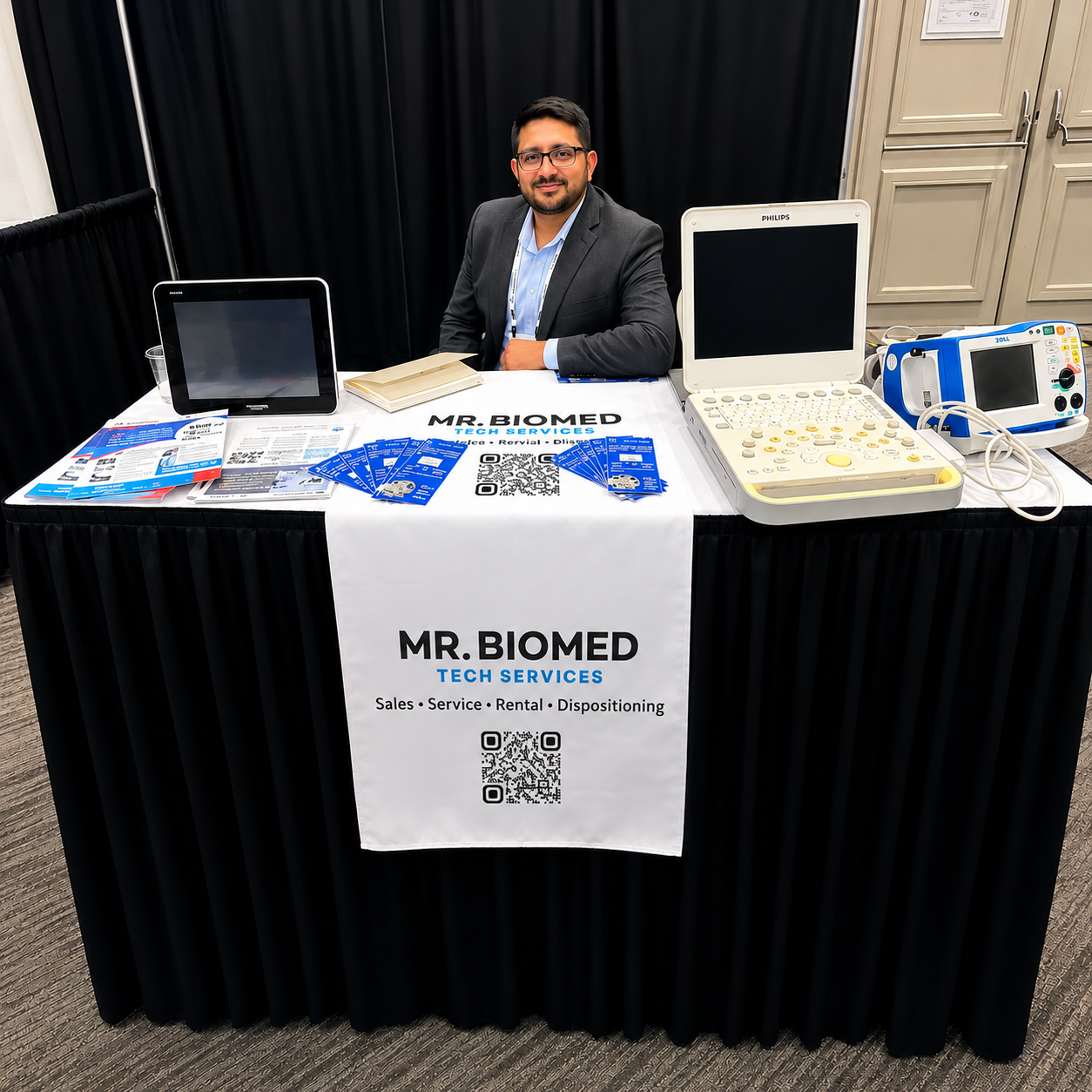
At Mr. Biomed Tech Services, retired medical equipment can be evaluated based on its condition and potential value, with options that may include resale, buy-back, de-installation, pickup, documented disposition, and responsible disposal. If your healthcare facility has unused, outdated, or retired medical equipment, contact Mr. Biomed Tech Services at +1 (469) 767-8853 to discuss your equipment disposition and asset recovery options.
Visit Our Location: https://maps.app.goo.gl/9muTk51AG4KQzDxEA
What Is Medical Equipment Disposition?
Medical equipment disposition refers to the process of determining what should happen to medical equipment that a healthcare organization no longer needs.
A facility may have equipment that is:
- No longer required
- Replaced by newer technology
- Underutilized
- Damaged or uneconomical to repair
- At the end of its useful life
- Stored because no department currently needs it
- Suitable for resale or donation
Instead of treating every retired device as waste, organizations can evaluate each asset individually. This approach can help identify equipment that still has useful value while ensuring equipment that cannot reasonably be reused is handled appropriately.
Why Retired Medical Equipment Should Be Evaluated
Retired equipment can occupy valuable storage space and remain on an organization's asset records long after it stops serving a clinical purpose. A proper retired medical equipment disposition process starts with evaluation.
The condition of the equipment, manufacturer, model, age, service history, functionality, accessories, and current demand can all influence what happens next.
For example, an older imaging system may no longer meet the requirements of one hospital but could still have value in another setting. Similarly, equipment that is no longer clinically appropriate may have components or materials that can be responsibly recovered or recycled.
The goal is to make an informed decision rather than automatically sending every retired asset to disposal.
Medical Equipment Asset Disposition Process
A structured medical equipment asset disposition process can help facilities manage retired equipment more efficiently.
The process may include several stages:
1. Equipment Identification
The first step is identifying which assets are no longer required. Facilities may review equipment inventories, department records, service histories, and asset-management information to determine which devices should be evaluated.
2. Condition Assessment
The equipment's physical and functional condition should be reviewed. This can help determine whether the device is suitable for continued use, repair, resale, refurbishment, donation, or disposal.
3. Value Assessment
Equipment that remains functional may have resale or buy-back value. A value assessment can help the facility understand whether selling or trading the equipment makes more sense than disposing of it.
4. Disposition Planning
Once the equipment's condition and value are understood, the appropriate disposition route can be selected. Possible options may include resale, buy-back, trade-in, donation, recycling, or compliant disposal.
5. De-installation and Removal
Large medical systems often cannot simply be moved out of a facility. Equipment may require professional de-installation, transportation planning, and coordinated pickup.
6. Documentation
Proper records can help organizations maintain a clear history of what happened to retired equipment. Depending on the situation, documentation may include asset information, disposition records, transfer paperwork, and certificates of disposition.
Medical Equipment Buy-Back Services
Some retired equipment may still have significant value. Medical equipment buyback services in Texas can provide healthcare organizations with an alternative to simply storing or discarding usable equipment.
A buy-back evaluation may consider:
- Equipment model
- Age
- Condition
- Functional status
- Accessories
- Service history
- Market demand
- Availability of replacement parts
If equipment is viable, the facility may be able to recover part of its original investment. This can be especially useful when a hospital is upgrading equipment and needs to clear space for newer systems.
Medical Equipment Resale and Disposition
Resale can be another option for equipment that remains functional. Medical equipment resale and disposition can help connect usable retired equipment with organizations that may have a practical need for it.
However, resale should be based on an appropriate evaluation of equipment condition and suitability. A facility should know whether the device can reasonably be reused before investing time and resources into a resale process.
Mr. Biomed Tech Services states that it evaluates retired equipment for resale value when appropriate and can help determine whether an asset should be resold or disposed of.
Medical Equipment Disposal Services in Texas
Not every retired device has resale value. Some equipment may be too old, damaged, obsolete, incomplete, or uneconomical to restore. In those situations, medical equipment disposal services in Texas can help facilities manage the equipment responsibly. The appropriate disposal method can depend on the equipment type and materials involved.
Home healthcare organizations should avoid treating specialized medical devices like ordinary office waste. Certain equipment may contain components, electronics, batteries, or other materials that require appropriate handling.
A professional disposition provider can help determine the appropriate next step.
Medical Equipment Recycling Services
When equipment cannot be reused or resold, recycling may provide another option. Medical equipment recycling services can help recover materials from equipment that has reached the end of its practical service life.
Responsible recycling can reduce unnecessary landfill waste and help facilities manage retired electronic and equipment components more appropriately. Recycling is generally considered after evaluating whether the equipment can still provide useful value through reuse, resale, donation, or refurbishment.
Retired Medical Equipment Removal
Large medical equipment can be difficult to remove without proper planning. Retired medical equipment removal may involve heavy or complex systems such as imaging equipment, hospital equipment, laboratory systems, or other facility-grade devices.
A professional removal process may require:
- Equipment identification
- Site coordination
- De-installation planning
- Safe handling
- Transportation
- Pickup scheduling
- Documentation
Removing equipment properly can also help minimize disruption to clinical operations.

Medical Equipment Decommissioning
Before some equipment leaves a facility, it may need to be decommissioned. Medical equipment decommissioning can involve disconnecting the system, preparing it for removal, securing relevant records, and ensuring that the equipment is no longer connected to facility infrastructure.
For certain devices, decommissioning may also involve removing stored information or addressing software and network connections. A structured process helps ensure that equipment is not simply abandoned or moved without considering these requirements.
Data Security and Medical Equipment Disposition
Modern medical equipment can contain electronic storage, configuration information, patient-related data, or connections to healthcare networks. For this reason, data security should be considered when retiring applicable equipment.
Medical equipment data destruction may be necessary for devices that contain storage media or retained information. Healthcare organizations should follow their internal privacy and security procedures and ensure that applicable equipment is handled in a manner consistent with relevant requirements.
Mr. Biomed Tech Services describes its disposition services as including HIPAA-conscious data destruction for applicable retired equipment.
Certificate of Disposition
Documentation is an important part of responsible asset retirement. A certificate of disposition for medical equipment can provide a record showing what happened to a retired device after it left the facility.
Depending on the disposition process, documentation can help organizations maintain clearer asset records and demonstrate that equipment was transferred, resold, recycled, or disposed of appropriately.
Mr. Biomed Tech Services states that its disposition process can include certificates of disposition and documented asset paperwork.
What Happens When Equipment Can Still Be Repaired?
Not every old device should automatically be retired. Sometimes an organization considers an asset retired because it has developed a technical problem. In such cases, medical equipment repair services may be worth evaluating before final disposition.
A repair-versus-replace assessment can consider:
- Repair cost
- Equipment age
- Parts availability
- Service history
- Expected remaining useful life
- Clinical requirements
- Downtime
- Replacement cost
If the equipment can be restored economically and still meets the facility's requirements, repair may extend its useful life. If repair costs are too high or the equipment has reached the end of its practical lifecycle, disposition may be the better option.
How Rental Can Support Equipment Replacement
Retiring equipment can sometimes create a temporary gap before replacement equipment becomes available. This is where medical equipment rental services can support a facility's transition.
For example, a hospital may need to retire an aging device but have a delay before a replacement arrives. Temporary rental equipment can help maintain operational capacity during the transition.
This creates a practical lifecycle pathway:
Retire → Evaluate → Replace → Rent temporarily if needed
Mr. Biomed Tech Services provides rental services alongside sales, repair, inspection, and disposition, allowing healthcare organizations to consider multiple equipment options within one broader equipment strategy.
New Equipment, Refurbished Equipment, or Retired Assets?
Equipment lifecycle decisions are not always limited to buying new equipment.
Depending on the facility's needs, an organization may consider:
New equipment:
Useful when a facility needs current technology, new functionality, or a long expected service life.
Refurbished equipment:
Can provide another option when budget and functionality are important considerations.
Rental equipment:
Useful when equipment is needed temporarily or during replacement periods.
Repair:
May extend the useful life of an existing system when the equipment remains appropriate.
Disposition:
Appropriate when equipment is no longer needed, viable, or economical to maintain.
Considering these options together can help healthcare facilities avoid unnecessary equipment expenses.
When Should a Facility Consider Medical Equipment Disposition?
Healthcare organizations should consider disposition when equipment is no longer contributing meaningful value.
Common situations include:
- Department upgrades
- Facility expansion or relocation
- Equipment replacement
- Technology obsolescence
- Excess inventory
- Underutilized equipment
- Repeated equipment failures
- Storage limitations
- End-of-life equipment
- Changes in clinical requirements
Starting the process early can make equipment transitions more organized.
Medical Equipment Disposition for Texas Healthcare Facilities
Texas hospitals, clinics, surgery centers, imaging facilities, laboratories, and other healthcare organizations may manage large and diverse equipment inventories. A statewide disposition strategy can help facilities address retired equipment without treating every asset the same way.
Mr. Biomed Tech Services serves healthcare organizations across Texas and offers equipment lifecycle support that includes purchasing, rentals, repairs, inspections, maintenance, and disposition.
This broader approach can make it easier for a facility to decide whether an asset should be repaired, rented for a replacement period, sold, traded in, donated, recycled, or properly disposed of.
Why Professional Asset Disposition Matters
Retiring medical equipment involves more than clearing a storage room. Healthcare organizations may need to consider equipment value, patient data security, documentation, transportation, deinstallation, environmental handling, and future replacement needs. A professional disposition process can help bring these considerations together.
Instead of allowing retired equipment to remain unused, organizations can evaluate whether the equipment still has financial or operational value.
Final Thoughts
Medical Equipment Disposition & Retired Asset Services can help healthcare facilities manage equipment that has reached the end of its useful role. The best disposition decision depends on the equipment's condition, value, clinical suitability, service history, and future potential. Some assets may be appropriate for resale or buy-back, while others may require recycling or compliant disposal.
Repair should also be considered when an older device remains clinically useful, while rental can provide temporary support during replacement projects. By evaluating these options together, healthcare organizations can reduce unnecessary storage, recover value where possible, maintain better asset records, and create a more organized equipment lifecycle strategy.
If your facility has unused, outdated, damaged, or retired medical equipment, contact Mr. Biomed Tech Services at +1 (469) 767-8853 to discuss evaluation, buy-back, resale, removal, or disposition options.
Frequently Asked Questions
What is medical equipment disposition?
Medical equipment disposition is the process of determining what should happen to equipment a healthcare facility no longer needs. Options may include resale, buy-back, donation, refurbishment, recycling, or disposal.
Can retired medical equipment still have value?
Yes. Functional equipment may have resale, buy-back, trade-in, or donation value depending on its age, condition, model, accessories, and market demand.
Should medical equipment be repaired before disposal?
It depends on the equipment's condition and expected remaining useful life. A repair-versus-replace evaluation can help determine whether restoring the equipment is financially and operationally practical.
Does medical equipment disposition include data destruction?
For applicable equipment containing stored information, data security should be addressed before the device leaves the facility. Proper data destruction procedures should follow the organization's privacy and security requirements.
What happens to medical equipment that cannot be resold?
Equipment that cannot reasonably be reused or resold may be directed toward appropriate recycling or disposal processes based on its type, materials, and applicable handling requirements.
Can a disposition provider remove equipment from a healthcare facility?
Yes. Depending on the equipment and service arrangement, disposition can include de-installation, pickup, transportation, and documentation. Mr. Biomed Tech Services describes de-installation, pickup, and disposition paperwork as part of its retired-equipment support.
Can hospitals sell unused medical equipment?
Yes. Usable surplus equipment may potentially be sold or bought back after its condition and market value are evaluated. The appropriate option depends on the equipment and the facility's requirements.






Leave a Comment
Comments [0]
No comments available for this blog.