
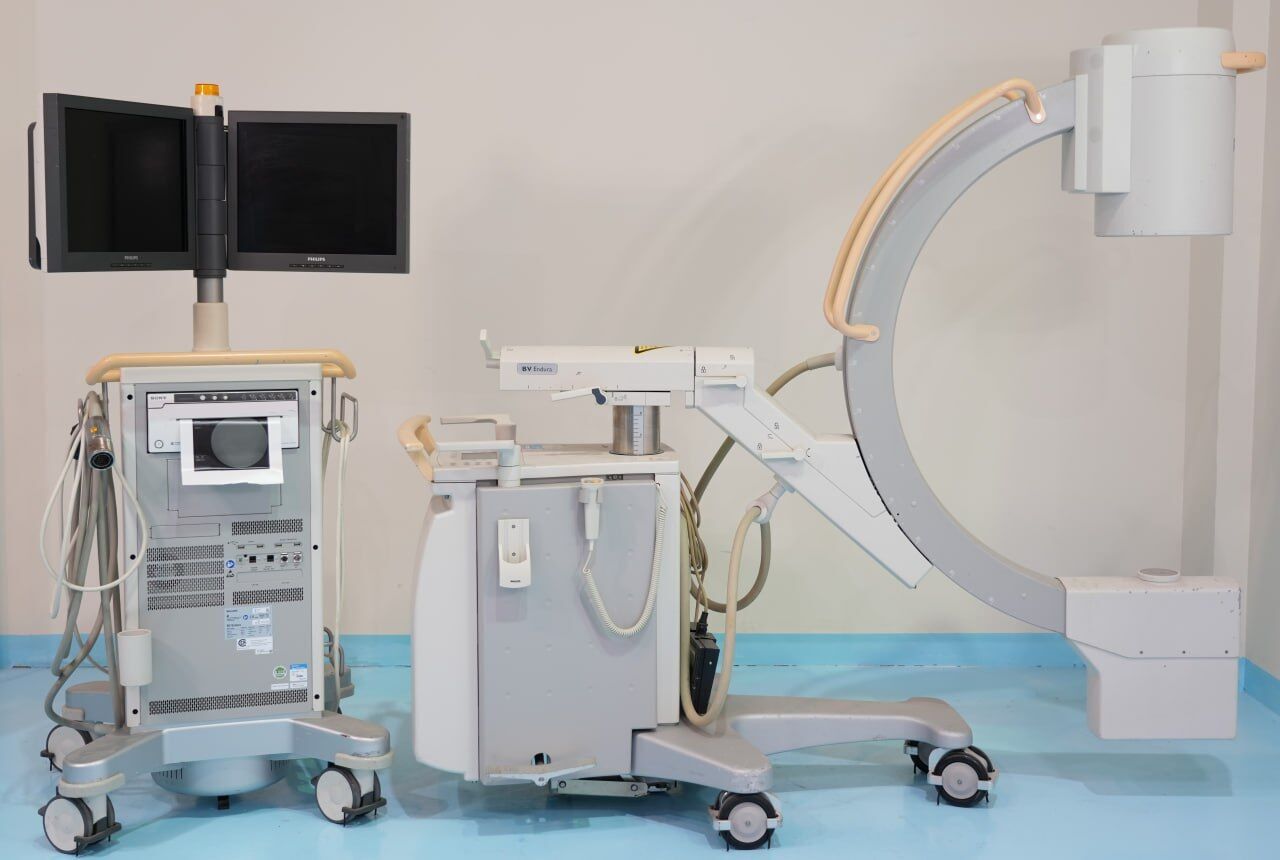
Shreveport is under 200 miles from our base in Garland, Texas, closer than many Texas cities. That makes buying a refurbished C-arm from North Texas practical, as long as the paperwork, the room and the delivery happen in the right order. Here is that order, from first quote to first case. For C-arm models, repair and rental, see our C-arm sales, repair and rental page.
Step 1: Match the C-arm to your cases
Write down the procedures the C-arm will cover, the largest patients you expect to image, and whether images need to reach PACS. Those three answers decide between an image intensifier and a flat-panel detector, the detector size, and the software package. If you are weighing a full-size unit against a mini C-arm, our Louisiana C-arm buying guide compares the two.
Step 2: Start the LDEQ paperwork early
In Louisiana, the facility registers each radiation machine with the Radiation Section of the Louisiana Department of Environmental Quality (LDEQ). Some installations also need a shielding review, and LDEQ asks facilities to contact its licensing section before construction if they are unsure. If the new C-arm replaces an old one, the old unit's transfer or disposal has to be reported as well. Starting when you choose the machine, rather than when it arrives, keeps a new C-arm from sitting unused in a storeroom.
Step 3: Get the room ready
- Power: ask for the unit's electrical requirements and confirm the room has a suitable outlet. Full-size C-arms draw far more power than mini C-arms.
- Space: measure doorways, elevators and corners between the loading dock and the room, and check that the C-arm can move fully around the table.
- Table: confirm the procedure table is radiolucent where you plan to image.
- Network: if images go to PACS, collect the network settings first. Our guide to connecting a refurbished C-arm to PACS lists them.
Step 4: Delivery from North Texas
A C-arm should travel with the arm locked and padded, the monitor cart packed separately, and insurance for the trip. Before it leaves, agree on who unloads it, who inspects it on arrival, and what happens if anything is damaged. When you request a quote, we confirm delivery options and dates for your Shreveport address.
Step 5: Test before the first patient
A long trip can knock a system out of adjustment, so have it checked after delivery and before clinical use: image quality, the dose display, collimation and the safety interlocks, with the results written down. Keep that record with the test record and parts list that came with the machine, so your next service engineer starts with the full history. Ask whether training for the staff who will run the unit is included.
Step 6: Plan service before you need it
We provide on-site installation and service in Shreveport and across Louisiana, with visits scheduled in advance, so plan those dates with us before delivery. Our reconditioned equipment comes with a 90-day warranty; ask how warranty repairs are scheduled for your facility.
Common delays, and how to avoid them
| Delay | Why it happens | How to avoid it |
|---|---|---|
| Registration not filed | Paperwork left until the machine arrives | Start the LDEQ steps when you order |
| Room not ready | Shielding review, outlet or table not sorted | Have the physicist and electrician visit before delivery |
| Damage in transit | Poor crating or rushed unloading | Insist on crating, a liftgate and an inspection before you sign |
| Images not reaching PACS | DICOM not licensed, or network details missing | Confirm the license and send the network details ahead of installation |
| Staff unsure of the machine | No training before the first list | Schedule training for installation day |
A checklist you can print
- Procedures and case volume written down
- Configuration chosen and confirmed in writing
- Test record, tube history and recent images received
- LDEQ registration steps started
- Shielding review booked or complete
- Outlet, table and network ready
- Delivery date confirmed, liftgate booked
- Arrival inspection and installation visit scheduled
- Operators named and training booked
- First preventive maintenance visit on the calendar
Ticking these off in order is the simplest way to get from a signed quote to the first case without a machine sitting idle in a crate.
Radiation protection for the team
Before the first case, make sure everyone who will be in the room has a lead apron and thyroid shield that fit, and that staff who work with the C-arm regularly have dosimetry badges. Agree on simple habits: step back during exposures where possible, keep hands out of the beam, collimate tightly and use pulsed fluoroscopy at the lowest rate that gives a usable image. These habits protect staff over years of cases and keep patient dose low.
For a quote on a C-arm for Shreveport, call (469) 767-8853 or send us a request with your procedures and room details.





Leave a Comment
Comments [0]
No comments available for this blog.